Living and Nonliving Things Worksheets: Engaging, No-Prep Activities for K–2
Teaching young learners the difference between living and nonliving things is a foundational part of any early science curriculum. But if you’ve ever taught this topic, you know that students can easily get confused especially when objects like the sun, fire, or clouds enter the discussion!
That’s where well-designed, no-prep worksheets can make a huge difference. In this post, we’ll explore how Living and Nonliving Things worksheets can support your teaching, deepen student understanding, and keep your lessons engaging and meaningful.
Why This Topic Matters in K–2
Understanding living and nonliving things helps students:
Build early scientific observation skills
Develop classification and sorting abilities
Strengthen their understanding of basic life science concepts
At this stage, students are just beginning to grasp ideas like growth, movement, and needs (food, water, air). Providing repeated, varied practice is key to helping these concepts stick.
What Makes These Worksheets Effective?
These Living and Nonliving Things Worksheets are designed with both teachers and young learners in mind. They are:
✔️ No-Prep and Easy to Use
Just print and go—perfect for busy teachers who need effective resources without extra planning time.
✔️ Student-Friendly and Engaging
The activities use simple language and visuals, making them accessible for early learners.
✔️ Flexible for Any Classroom Setting
You can use them for:
- Whole-class lessons
- Small group instruction
- Independent practice
- Science centers
- Interactive notebooks
What’s Included in the Resource?
This resource offers a wide variety of activities to support different learning styles:
Core Worksheets
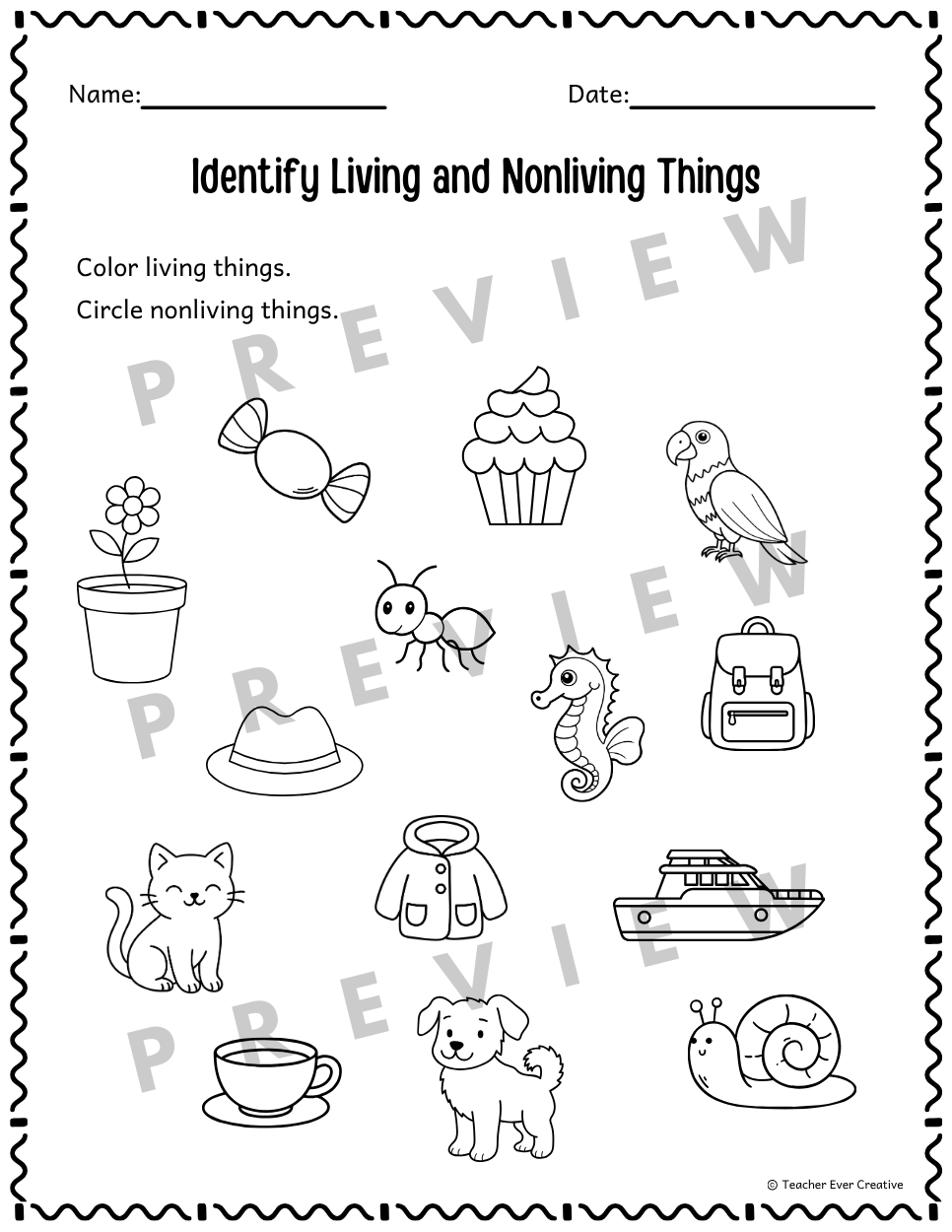
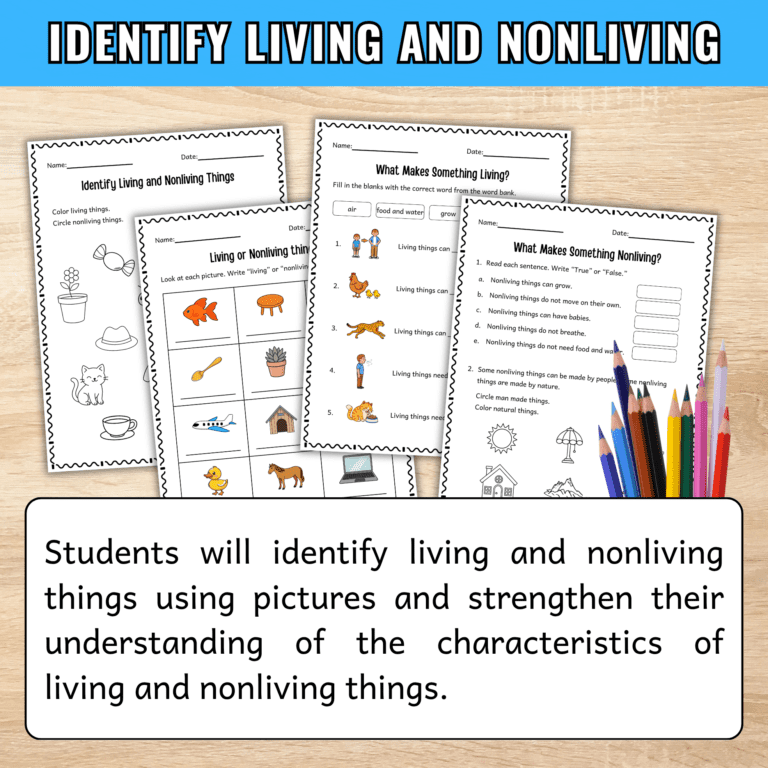
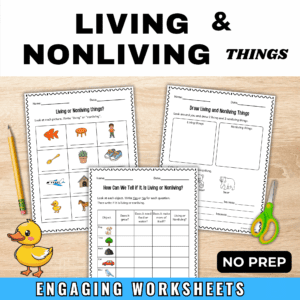
Identify Living and Nonliving Things
Living or Nonliving Things?
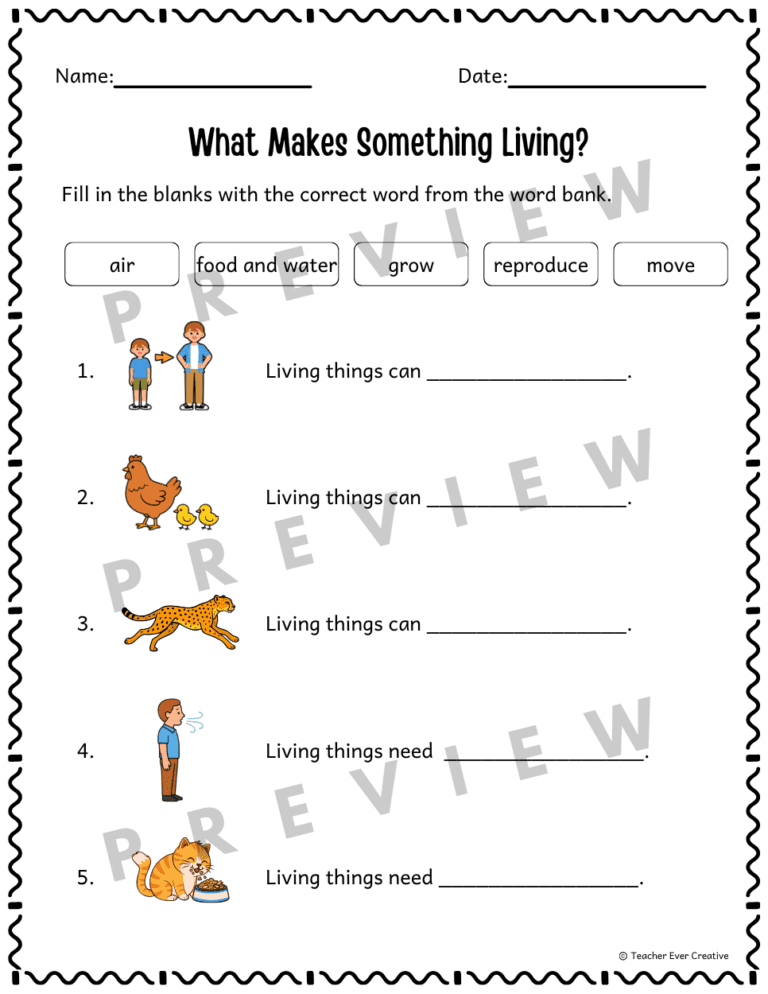
What Makes Something Living?
What Makes Something Nonliving?
How Can We Tell if It Is Living or Nonliving?
Deeper Thinking Activities
What Do Living Things Grow Into?
Is It Alive? Let’s Observe!
Hands-On & Creative Tasks
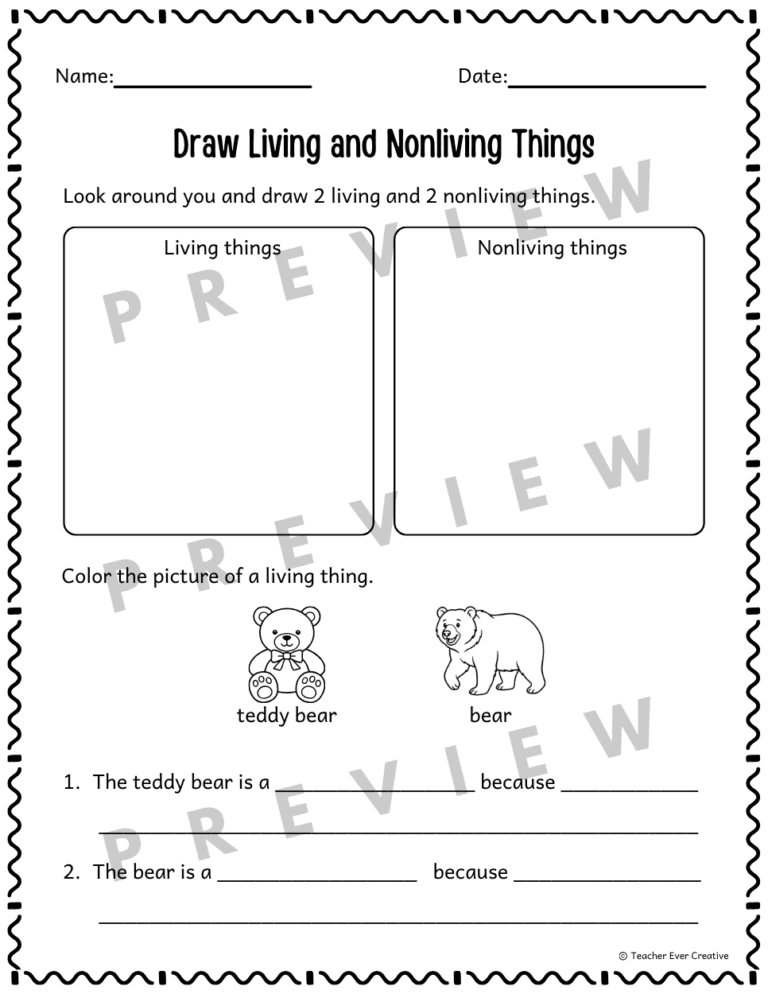
Draw Living and Nonliving Things
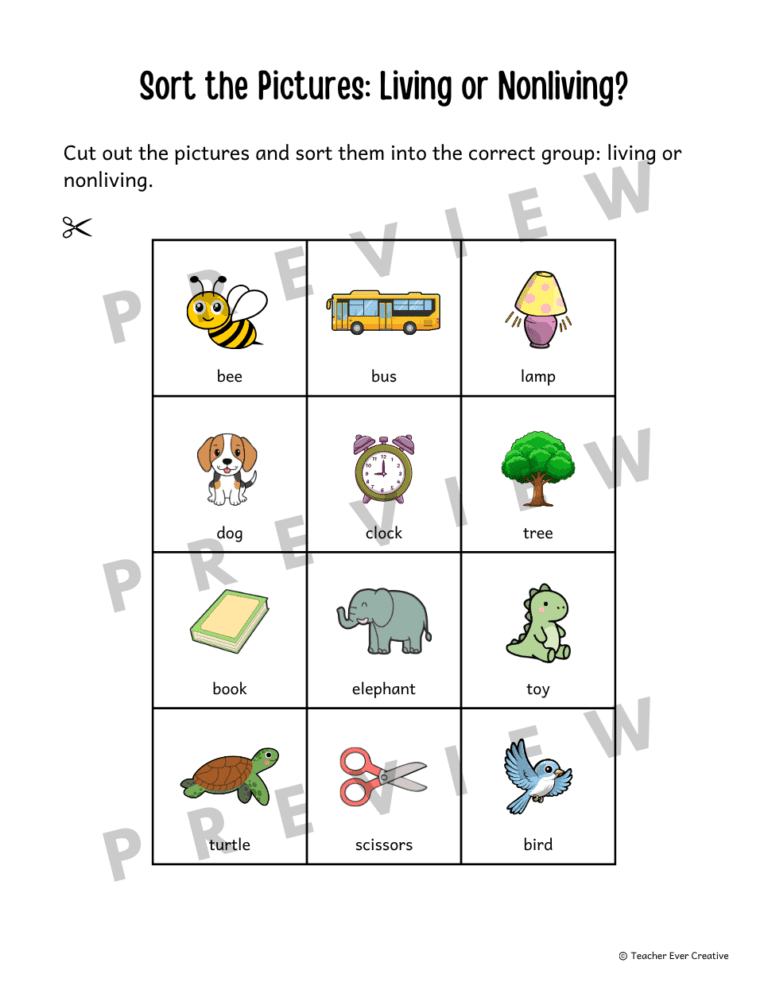
Sort the Pictures: Living or Nonliving? (cut-and-paste with 12 images)
Classroom Tips for Maximum Impact
Here are a few expert strategies to make the most of these worksheets:
1. Start with Real-Life Examples
Bring in classroom objects or show pictures.
Ask:“Is this living or nonliving? How do you know?”
2. Encourage Student Reasoning
Instead of just identifying, prompt students to explain:
“What makes it living?”
“Does it grow or need food?”
3. Use the Cut-and-Paste Activity as a Center
The sorting activity with 12 pictures works perfectly as a hands-on science station.
4. Reinforce Vocabulary Daily
Words like living, nonliving, grow, and needs should be revisited often.
Make Your Teaching Easier
Teaching living and nonliving things doesn’t have to feel confusing for your students. With meaningful discussions, and engaging practice, your learners will start to confidently identify and explain the differences around them.
If you’re looking for a simple, effective way to reinforce this concept without extra prep, these Living and Nonliving Things worksheets are a great solution.
👉 Grab your copy on TPT today and start using these no-prep, engaging activities in your classroom right away!
Categories

Hello!
Hi! Here, you’ll find Science, Math, and Art resources that I love creating and sharing, based on my years of experience teaching various grade levels and abilities. I strive to make high-quality, ready-to-use, and low-prep resources so that fellow teachers can save time when planning lessons.